Introduction
Police body-worn cameras (BWCs) have become an essential tool for modern law enforcement agencies. They improve transparency, provide critical evidence, enhance officer accountability, and strengthen community trust. However, purchasing body cameras involves much more than comparing video quality or price. Agencies must consider storage, cybersecurity, privacy laws, integration with existing systems, total cost of ownership, and long-term vendor support.
This guide provides a comprehensive framework for evaluating, selecting, and implementing police body camera systems.
Why Police Departments Use Body Cameras
Body cameras provide benefits for officers, agencies, prosecutors, defense attorneys, and the public.
Common objectives include:
- Improve evidence collection
- Reduce complaints against officers
- Increase transparency
- Improve officer safety
- Support criminal investigations
- Enhance courtroom evidence
- Document use-of-force incidents
- Improve officer training
- Reduce false allegations
- Strengthen public confidence
Types of Police Body Cameras
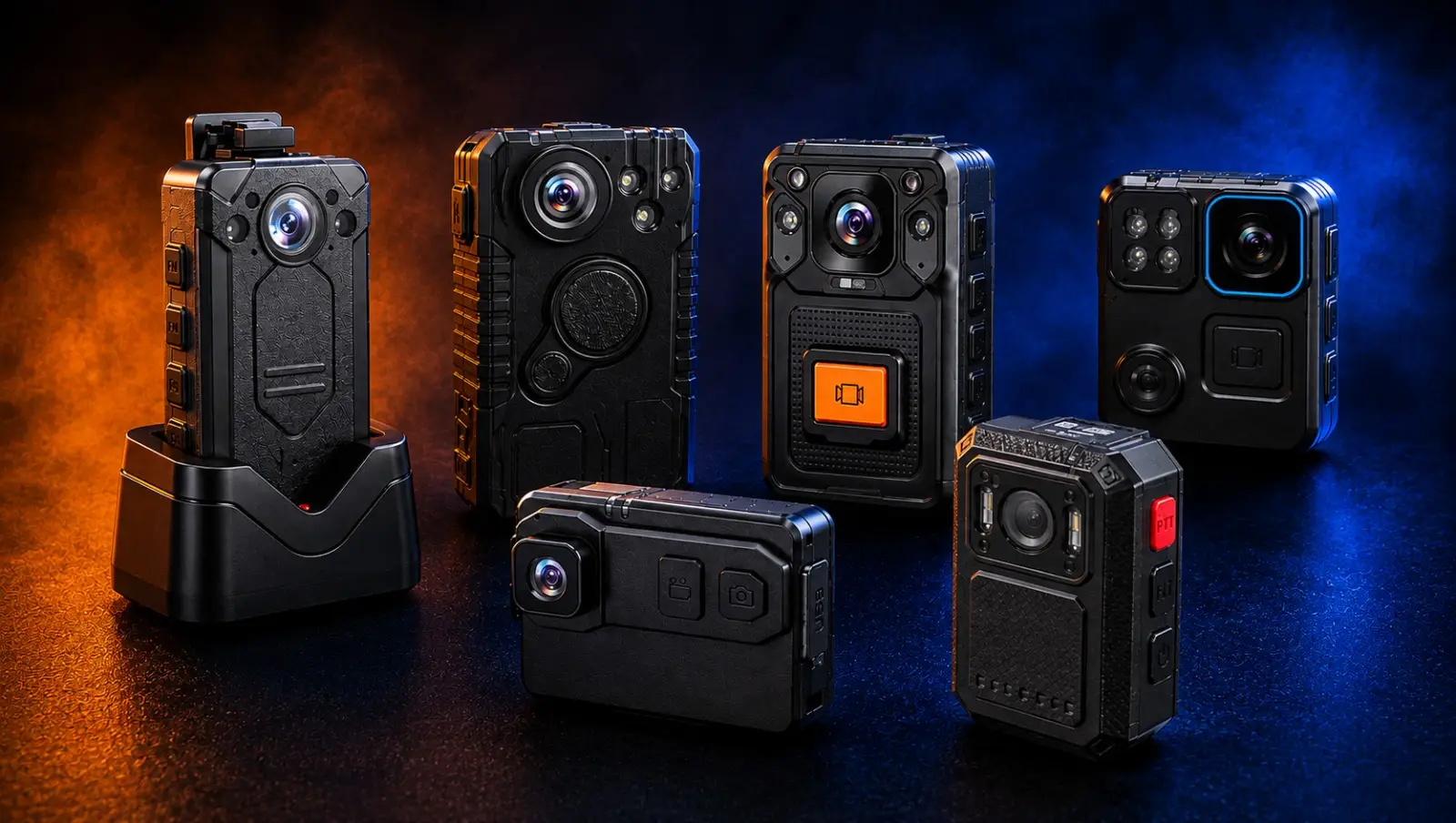
Standard Body Cameras
Designed for patrol officers.
Features include:
- HD video
- Audio recording
- GPS
- Wi-Fi
- Docking station upload
- Cloud synchronization
Best for:
- Patrol
- School resource officers
- Parking enforcement
- Community policing
Rugged Tactical Cameras
Built for specialized units.
Features:
- Higher durability
- Waterproof construction
- Long battery life
- Night vision support
- External battery options
Best for:
- SWAT
- Search and rescue
- Border patrol
- Tactical response teams
Integrated Camera Systems
These connect with other law enforcement technology.
Examples:
- In-car video systems
- CAD software
- Digital evidence management
- Automatic license plate recognition
- Emergency activation systems
Key Buying Considerations
1. Video Resolution
Recommended minimum:
1080p Full HD
Higher options:
Higher resolution improves:
- Facial recognition
- License plate capture
- Courtroom evidence
- Zoom capability
Tradeoff:
Higher resolution increases storage costs.
2. Field of View
Typical range:
A wider angle captures more surroundings but may introduce image distortion.
Recommended:
140°–150°
3. Low-Light Performance
Many police interactions occur at night.
Look for:
- Large image sensors
- Infrared capability
- HDR
- Low-light optimization
4. Battery Life
Battery performance is one of the most important specifications.
Minimum recommendation:
10–12 hours
Ideal:
14–16 hours
Look for:
- Continuous recording
- Standby mode
- Fast charging
- Replaceable batteries (if available)
5. Pre-Event Recording
This records video before the record button is pressed.
Typical buffer:
30–120 seconds
Benefits:
- Captures escalating incidents
- Preserves important context
- Improves investigations
6. Audio Quality
Good audio can be as important as video.
Look for:
- Noise reduction
- Wind filtering
- Dual microphones
- Automatic gain control
7. GPS Tracking
GPS provides:
- Officer location
- Incident mapping
- Timeline verification
- Investigative support
8. Image Stabilization
Important during:
- Foot pursuits
- Vehicle stops
- Crowd control
- Physical confrontations
Digital stabilization improves evidence quality.
9. Recording Controls
Officers need controls that are easy to operate while wearing gloves.
Look for:
- Large buttons
- Tactile controls
- Vibration confirmation
- Audible alerts
Durability Requirements
A police body camera should withstand:
- Rain
- Dust
- Snow
- Heat
- Cold
- Drops
- Vibration
Recommended ratings:
Drop resistance:
At least 2 meters (6.5 feet)
Storage Options
Internal Storage
Typical capacities:
Advantages:
- Faster recording
- Less complexity
Dock Upload
Benefits:
- Automatic charging
- Automatic evidence upload
- Fleet management
- Firmware updates
Cloud Storage
Advantages:
- Off-site backup
- Easy sharing
- Automatic redundancy
- Disaster recovery
Consider:
- Subscription costs
- Security certifications
- Data residency requirements
Digital Evidence Management
A body camera is only part of the overall system.
A good evidence platform should provide:
- Secure uploads
- Metadata tagging
- Case management
- Search functions
- Audit logs
- Redaction tools
- Prosecutor sharing
- Court export
Security Features
Essential cybersecurity features include:
- AES-256 encryption
- Secure boot
- Digital signatures
- Multi-factor authentication
- Role-based permissions
- Chain-of-custody logging
- Tamper detection
Automatic Recording Features
Modern systems can automatically begin recording when:
- Emergency lights activate
- Firearms are drawn
- Vehicle doors open
- Officers run
- Dispatch sends high-priority calls
- Tasers are deployed
Automation reduces missed recordings.
Artificial Intelligence Features
Many modern systems now include AI-assisted capabilities.
Examples:
- Speech transcription
- Automatic redaction
- Face blurring
- License plate blurring
- Object detection
- Smart search
- Event categorization
These features can significantly reduce administrative workload.
Live Streaming
Useful for:
- Tactical incidents
- Active shooter response
- Major events
- Command oversight
Look for:
- LTE connectivity
- 5G support
- Secure streaming
- Minimal latency
Privacy Considerations
Departments should establish clear policies regarding:
- Recording inside homes
- Hospitals
- Schools
- Victims
- Juveniles
- Confidential informants
- Sexual assault investigations
- Witness interviews
Policy should define:
- When recording begins
- When recording ends
- Notification requirements
- Public records handling
- Retention schedules
Data Retention
Retention policies vary depending on:
- State law
- Local regulations
- Incident type
- Evidentiary value
Typical examples:
| Recording Type | Suggested Retention |
|---|
| Non-event | 30–90 days |
| Traffic stop | 90–180 days |
| Arrest | 1–3 years |
| Felony case | Until case disposition or longer per policy |
| Officer-involved shooting | Long-term retention according to legal requirements |
Integration Capabilities
Evaluate compatibility with:
- Computer-Aided Dispatch (CAD)
- Records Management Systems (RMS)
- Evidence Management Systems (EMS)
- In-car video
- Interview room cameras
- License plate recognition systems
- Drone video
- Mobile applications
Officer Safety Features
Useful safety capabilities include:
- Emergency activation
- Silent alarm
- GPS tracking
- Live monitoring
- Fall detection
- Remote camera activation (where legally and operationally appropriate)
Ease of Use
A body camera should require minimal training.
Consider:
- One-touch recording
- Voice prompts
- LED indicators
- Simple docking
- Automatic uploads
- Intuitive software
Total Cost of Ownership
Purchase price is only one component.
Include:
- Camera hardware
- Docking stations
- Mounts
- Licensing
- Cloud storage
- Evidence management
- Warranty
- Replacement units
- Software updates
- Training
- IT support
Over five years, software and storage often represent a significant portion of total costs.
Questions to Ask Vendors
Before purchasing, ask:
- What is the expected service life?
- How long does the battery last during continuous recording?
- What cybersecurity certifications do you maintain?
- What encryption standards are used?
- How is evidence protected from tampering?
- What integrations are available?
- What is included in the warranty?
- What are the annual software costs?
- How are firmware updates delivered?
- What customer support is available?
- Can the system scale as the department grows?
- What AI features are included?
- How are records requests supported?
- What training resources are provided?
- What is the average repair turnaround time?
Evaluation Checklist
Use this checklist when comparing vendors:
| Feature | Required | Vendor A | Vendor B | Vendor C |
|---|
| 1080p or higher | ✓ | | | |
| Wide-angle lens | ✓ | | | |
| 12+ hour battery | ✓ | | | |
| GPS | ✓ | | | |
| AES-256 encryption | ✓ | | | |
| Cloud evidence management | ✓ | | | |
| Automatic uploads | ✓ | | | |
| AI redaction | ✓ | | | |
| CAD integration | ✓ | | | |
| RMS integration | ✓ | | | |
| Audit trail | ✓ | | | |
| Live streaming | Optional | | | |
| Automatic activation | ✓ | | | |
| Rugged design (IP67/IP68) | ✓ | | | |
| Warranty (3+ years preferred) | ✓ | | | |
Implementation Best Practices
A successful deployment includes more than purchasing equipment.
Recommended steps:
- Define operational goals.
- Establish recording and retention policies.
- Engage legal counsel to ensure compliance with applicable laws.
- Conduct a pilot program with representative users.
- Evaluate user feedback and system performance.
- Train officers, supervisors, and evidence staff.
- Test integrations with existing systems.
- Develop public communication materials.
- Monitor usage and compliance.
- Review policies and technology regularly.
Common Purchasing Mistakes
Avoid these pitfalls:
- Choosing based solely on purchase price
- Underestimating storage requirements
- Ignoring recurring software costs
- Overlooking cybersecurity features
- Failing to test usability with officers
- Purchasing without a documented evidence management plan
- Neglecting interoperability with existing systems
- Insufficient training and change management
- Inadequate maintenance planning
- Lack of clear retention and privacy policies
Conclusion
Selecting a police body camera system is a strategic decision that affects operations, evidence management, legal compliance, officer safety, and public trust for years to come. While image quality and hardware specifications are important, agencies should evaluate the complete ecosystem—including digital evidence management, cybersecurity, integration capabilities, lifecycle costs, vendor support, and policy alignment.
A structured procurement process that includes stakeholder input, pilot testing, and a thorough assessment of long-term operational needs will help ensure the chosen solution delivers reliable performance and value throughout its service life.